



1 min read
|
03-30-2026
Social Media Marketing: Your Ultimate Guide to Skyrocketing Engagement
Summer Nguyen
|
04-28-2025

In an increasingly digital world, social media has transformed how businesses connect with their audiences. With over 5.22 billion active users globally, platforms like Facebook, Instagram, LinkedIn, TikTok, and others offer immense opportunities for businesses to build brand awareness, drive traffic, engage with customers, and boost sales. However, to fully harness the power of social media marketing, businesses need a strategic approach.
In this post, we’ll explore everything you need to know about social media marketing — from its definition and key benefits to actionable steps for building a strategy that delivers real results.
Let’s dive in!
What is Social Media Marketing?

Social Media Marketing (SMM) refers to the use of social media platforms to promote brands, products, or services. It involves creating and sharing engaging content, running paid advertising campaigns, and interacting with audiences to achieve business objectives such as brand awareness, lead generation, sales, and customer retention.
Key Components of Social Media Marketing
- Content creation: Developing high-quality and engaging posts, videos, stories, and ads.
- Audience engagement: Responding to comments and messages and fostering community relationships.
- Paid advertising: Running targeted ad campaigns to reach specific demographics.
- Performance analysis: Measuring results to optimize campaigns and achieve goals.
Benefits of Social Media Marketing
Social media marketing plays a crucial role in modern business strategies due to its ability to:
- Increase brand awareness: Social media helps brands reach a massive audience quickly and effectively.
- Improve audience engagement: Interactive content like videos, polls, and contests encourages user interaction, fostering stronger relationships with audiences.
- Drive website traffic and conversions: Social media acts as a bridge to direct users to websites, online stores, or landing pages.
- Cost-effective marketing: Compared to traditional marketing, social media campaigns are more affordable and offer better ROI.
- Access to customer insights: Analytics tools provide valuable data on audience behavior, preferences, and campaign performance, helping businesses improve their strategies.
How to Create a Social Media Marketing Strategy (Step-by-Step Guide)
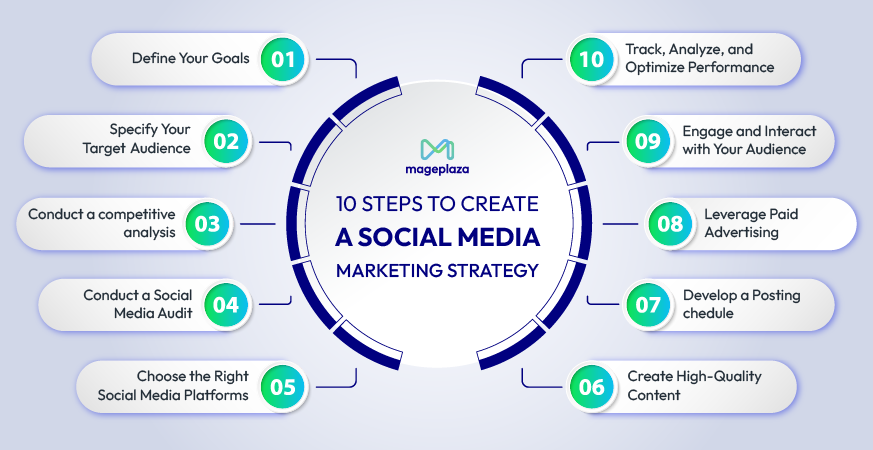
A well-defined social media marketing strategy helps businesses engage their audience, build brand awareness, and drive measurable results. Follow these steps to create an effective strategy:
1. Define your goals

The first and most crucial step in crafting a successful social media marketing strategy is to define clear, actionable goals that align seamlessly with your broader business objectives. Start by asking: What specific outcomes do I want to achieve through social media? Your goals might include increasing brand visibility, driving website traffic, generating high-quality leads, boosting audience engagement, or enhancing customer satisfaction and loyalty.
Once your overarching goals are established, break them down into focused, actionable steps. This ensures your strategy is both practical and measurable, allowing you to identify the precise actions needed to drive results.
For example, if your goal is to increase website traffic, actionable steps could include: Posting consistently with compelling calls to action (CTAs). Creating highly shareable content tailored to your audience’s preferences. Running targeted ad campaigns designed to attract visitors to key landing pages.
Tip: Use the SMART goal framework—make your goals Specific, Measurable, Achievable, Relevant, and Time-bound. For example, instead of saying, “I want more website traffic,” a SMART goal would be: “Increase website traffic by 20% over the next three months through targeted ad campaigns and consistent posting.”
2. Specify your target audience
To create a foolproof social media marketing plan, you must first understand who you’re communicating with — down to their most pressing needs and biggest pain points. The success of your strategy depends on how well you know your audience. If you don’t have a clear picture of who you’re speaking to, your content will consistently miss the mark.
Start by using data-driven tools to research your audience instead of relying on gut feelings or assumptions. Social media platforms provide valuable insights into audience demographics (age, gender, location), psychographics (interests, values, behaviors), and geographic information. This data will help you determine the kind of content that resonates most and drives engagement.
It’s equally important to recognize that audiences behave differently across platforms. Each social network caters to distinct user groups with unique preferences. For instance, your Facebook audience might prefer community-driven posts, while your Twitter audience may respond better to real-time updates and concise messaging. Understanding these platform-specific differences allows you to tailor your content strategy for maximum impact.
3. Conduct a competitive analysis
A competitive analysis provides valuable insights into what your competitors are doing well on social media and helps you understand your brand’s position in the market. It’s not just about copying their strategies but using the information to improve your own approach while maintaining your unique voice and perspective.
How to conduct a competitor analysis
#1. Identify your top five competitors
Focus on brands with similar products, target audiences, or industries.
Example: Organic skincare brands targeting eco-conscious consumers.
#2. Research their platforms
Analyze which platforms they use and how they use them.
- Are they active on Instagram, TikTok, or LinkedIn?
- What formats do they prioritize (Reels, Stories, videos)?
#3. Analyze their top posts
Identify their most engaging content and note recurring themes.
- Content types: Videos, memes, infographics
- Tone: Informative, humorous, emotional
- Visuals: Color schemes, branding
Example: Behind-the-scenes videos may perform best.
#4. Use social media listening tools
Track competitor mentions and audience sentiment.
Tools: Hootsuite, Sprout Social, Brandwatch.
#5. Schedule regular audits
Conduct competitor research quarterly to stay updated and refine your strategy.
4. Conduct a social media audit
Running an audit of your existing social media activity is key to understanding what resonates with your audience and what doesn’t. By analyzing performance, you can determine which content formats, messaging styles, and posting times yield the best results. This ensures that your efforts are targeted, efficient, and aligned with your goals.
How to Run a Social Media Audit
#1. Analyze engagement metrics
Start by reviewing analytics on each platform to identify your top-performing posts. Focus on key metrics such as:
- Likes, comments, shares, and saves
- Reach and impressions
- Click-through rates (CTR) and link clicks
- Video views and average watch times
Why it matters: High engagement shows that your audience finds the content valuable and relevant, while low interaction suggests opportunities for improvement.
#2. Identify trends and patterns Look for consistent patterns in your data to pinpoint what works best. Ask questions such as:
- Which content formats perform the best (videos, images, carousels, polls)?
- What type of messaging style gets the most engagement (informative, entertaining, or inspirational)?
- When is your audience most active (days of the week, time of day)?
Example: You might find that your audience prefers short videos over static posts on Instagram or that they are most active on weekends. Use this information to refine your content and posting schedule.
#3. Audit each platform individually
Audiences behave differently on each social media platform, so what works on one may not work on another.
- On Facebook, community-driven posts or live videos may perform well.
- On Instagram, visually appealing content like Reels or Stories may drive engagement.
- On LinkedIn, professional and value-driven content, such as case studies or thought leadership, often thrives.
Tip: Treat each channel as its own ecosystem and tailor content accordingly.
#4. Evaluate content effectiveness
Once you’ve identified your top-performing posts, assess their alignment with your goals.
- Did the content achieve its purpose (e.g., driving traffic, boosting engagement, generating leads)?
- Are high-engagement posts aligned with your business goals?
Example: If your audience loves meme-style videos that drive engagement but don’t relate to your products or services, your strategy may need adjustment to prioritize goal-oriented content.
Once you’ve completed your audit, evaluate the effectiveness of each top-performing piece of content in achieving your specific goals. High engagement doesn’t always equal success if it’s not aligned with your objectives.
For example: If followers are enthusiastically engaging with meme-style videos that don’t relate to your product or service, the content may boost visibility but fail to drive product sales or leads. This highlights the need to strike a balance between entertaining your audience and creating content that directly supports your business goals.
5. Choose the right Social Media platforms
Now that you have a clearer understanding of who your audience is and where they spend their time, it’s time to identify the social media channels that deserve your focus. Instead of spreading yourself too thin across every platform, prioritize the ones that align best with your industry, audience preferences, and business goals.
Creating and maintaining a strong social media presence takes significant resources — from content creation to community management. While large corporations may have the budget and capacity to be active on all platforms, small and medium-sized businesses must be more strategic.
Start by assessing the resources you have — time, budget, and team capacity — and focus on platforms that offer the highest return on investment (ROI). For example:
- If your audience is professionals or B2B clients, LinkedIn may deliver the best results.
- If you’re targeting visually-driven audiences, Instagram or Pinterest could be ideal.
- For real-time updates and trending topics, Twitter (X) might be your go-to platform.
Tip: Start with 1-3 platforms and scale as you gain traction.
6. Create high-quality content

Now that you’ve conducted your research and chosen the right social media platforms, it’s time to plan your content strategy and approach.
In today’s fast-paced digital landscape, the popularity of short-form video content highlights one key truth: people want quick, valuable information without having to dig through long, drawn-out content. To meet this demand, design a clear plan for the type of content you’ll create and share across your chosen platforms.
Your content strategy should align with the unique preferences of both the platform and the audience you’re trying to reach. Different platforms cater to different content styles—for example, short videos thrive on Instagram and TikTok, while professional articles perform best on LinkedIn.
To ensure your content resonates, create a strategy that reflects all of your customer personas and platform-specific needs. By offering tailored content for each channel, you make it more engaging for customers and increase the likelihood they’ll follow your brand across multiple platforms.
Find content inspiration
One of the biggest challenges of creating a social media strategy is consistently coming up with fresh content ideas. The good news? Inspiration is everywhere—you just need to know where to look.
Here are some practical ways to generate content ideas:
- Answer customer questions: Use frequently asked questions or highlight insightful comments from your audience to create helpful and engaging posts.
- Check customer support tickets: Look through support tickets to uncover common objections, hesitations, or pain points, then address them through informative content.
- Leverage trending topics: Stay relevant by jumping on trending topics or viral conversations. Add your unique spin to stand out and align it with your brand voice. On Facebook, tracking Facebook trends helps you spot what’s picking up momentum before you miss the window.
- Explore relevant hashtags: Browse popular hashtags in your niche to see what content is performing well and gaining traction. Use this as inspiration for your posts.
- Share reviews and testimonials: Spotlight customer reviews, testimonials, or user-generated content (UGC) to build trust and highlight the value of your products or services.
- Create mini-guides: Break down your products or services into bite-sized, easy-to-digest guides, tips, or tutorials that educate and add value to your audience.
Content types to consider
- Educational: How-to guides, tutorials, and industry insights.
- Visual: High-quality photos, infographics, short videos (Reels, Stories).
- Interactive: Polls, quizzes, Q&A sessions, challenges.
- User-Generated Content (UGC): Share content created by your audience to build trust.
- Storytelling: Behind-the-scenes content, success stories, or case studies. For inspiration, see how Disney uses storytelling in its marketing strategy to emotionally connect with audiences and build long-term brand loyalty.
7. Develop a posting schedule
Creating a consistent posting schedule is essential for maintaining an active presence on social media and ensuring a steady flow of content. It keeps your audience engaged, builds trust, and helps you stay top of mind.
Start by posting at a manageable frequency and gradually increase as you refine your strategy and discover what resonates with your audience. Quality is more important than quantity, so focus on creating valuable content before ramping up.
Set platform-specific schedules
Each platform requires a tailored approach. Use the following guidelines as a starting point:
- Instagram: 3–5 posts per week (Reels, Stories, carousel posts).
- Facebook: 2–4 posts per week (engaging posts or videos).
- Twitter: 1–2 tweets per day (real-time updates or trends).
- LinkedIn: 2–3 posts per week (professional or value-driven content).
- TikTok: 2–5 posts per week (short, creative videos).
Determine optimal posting times
Focus on posting when your audience is most active to maximize engagement. Each platform has its own ideal times, so the best time for TikTok may differ from Instagram. If unsure, consider when people typically check their feeds: mornings, lunch breaks, commutes, or evenings.
Discover your audience’s peak times through trial and error, as popular times can vary by season or trends. Use these guidelines as a starting point, but stay flexible and adapt as needed. To stay consistent, schedule posts in batches at least a week in advance. Use tools like Buffer or Hootsuite to automate publishing, freeing up time for other priorities while your content goes live seamlessly.
Example:
- Instagram: Mornings and evenings
- LinkedIn: Weekday mornings
- Twitter: Lunchtime and late afternoons
8. Leverage paid advertising
Starting out on social media can feel like an uphill battle, especially when gaining traction seems slow. If your posts are struggling to get noticed, social media advertising can give your accounts the boost they need.
One of the biggest advantages of social media ads is their laser-focused targeting capabilities. You can define your ideal audience with incredible precision, ensuring your content reaches the right people.
Examples of Targeting Options:
- Working moms aged 25 to 40.
- Yoga enthusiasts in New York City.
- Tech-savvy millennials who love online shopping.
Choose Your Advertising Methods
Instagram Stories Ads:
- Blend naturally as users scroll Stories.
- Use engaging visuals and CTAs like “Swipe Up.”
Instagram Feed Ads:
- Appear in users’ feeds with direct links.
- Great for driving traffic or promoting offers.
YouTube In-Stream Ads:
- Show before, during, or after videos.
- Keep ads short and engaging for maximum impact.
TikTok Ads:
- Integrate seamlessly into TikTok’s feed.
- Create fun, trend-driven, and visually engaging content.
Tip: Match your ads to the platform’s style to connect effectively with users.
9. Engage and interact with your audience
Building meaningful connections with your audience is essential for social media success. Actively engaging with your followers—by responding to comments, messages, and mentions—fosters a sense of community and shows your audience that their voices matter.
Don’t let your content exist in isolation. Encourage interactions, start discussions, and create opportunities for meaningful engagement.
How to actively engage with your audiences
- Respond promptly: Acknowledge comments and messages to show your audience you’re listening.
- Encourage conversations: Ask open-ended questions or run polls to invite feedback.
- Show appreciation: Like or share user-generated content (UGC) to make your followers feel valued.
- Be authentic: Use a friendly, approachable tone that reflects your brand’s personality.
- Foster community: Create interactive content, like challenges or live Q&A sessions, to bring followers together.
10. Track, analyze, and optimize performance
To ensure your social media strategy is effective, regularly measure and analyze your results to understand what’s working and identify areas for improvement. Focus on tracking key metrics such as engagement rate (likes, comments, shares), follower growth, click-through rate (CTR), conversion rate, and ROI on ads. These metrics provide valuable insights into how well your content resonates with your audience and whether it aligns with your business goals.
Utilize tools like built-in social media analytics (Facebook, Instagram, LinkedIn), Google Analytics, or third-party platforms to gather and interpret data.
Once you’ve identified trends, optimize your strategy by doubling down on high-performing content, refining underperforming posts, and experimenting with new approaches. Regular analysis and adjustments will ensure your social media efforts stay relevant, effective, and aligned with your overall objectives.
Challenges in Social Media Marketing and How to Overcome Them
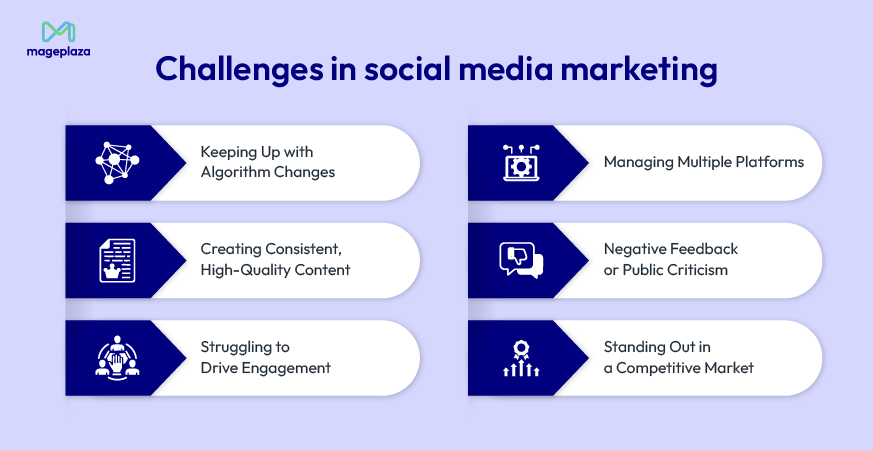
While social media marketing offers incredible opportunities for businesses to connect with their audience, it also comes with its fair share of challenges. Many marketers struggle to deliver engaging content consistently, stand out in a saturated space, or measure the effectiveness of their efforts. However, with the right strategies, tools, and mindset, these obstacles can be overcome to achieve impactful results.
Here are some common challenges in social media marketing and actionable solutions to address them:
1. Keeping Up with Algorithm Changes
Social media platforms frequently update their algorithms, which affects organic reach and engagement.
Solution:
- Stay updated: Follow platform blogs (e.g., Facebook Business Blog, Instagram Creators) and industry experts for updates.
- Diversify content: Use a mix of content types (videos, Reels, Stories) to adapt to new trends.
- Prioritize engagement: Encourage interactions (comments, shares, and saves), as these signals often improve visibility.
- Leverage paid ads: Invest in paid campaigns to bypass organic reach limitations.
2. Creating Consistent, High-Quality Content
Maintaining a steady stream of engaging and professional content can be time-consuming and resource-heavy.
Solution:
- Content Calendar: Plan posts in advance with tools like Buffer or Hootsuite to stay organized.
- Repurpose Content: Turn blog posts into carousels, videos into Reels, or snippets into quotes.
- Use Design Tools: Platforms like Canva and Adobe Spark simplify content creation.
- User-Generated Content (UGC): Encourage your audience to share content related to your brand.
3. Struggling to Drive Engagement
Getting people to interact with your content can be challenging, especially in saturated markets.
Solution:
- Interactive posts: Use polls, quizzes, and Q&A sessions to drive engagement.
- Call-to-action (CTA): Include CTAs like “Comment your thoughts!” or “Tag a friend who needs this.”
- Post at optimal times: Use insights to determine when your audience is most active.
- Experiment with content: Analyze which content formats (videos, memes, carousels) resonate best.
4. Managing Multiple Platforms
Handling different social media platforms simultaneously can be overwhelming.
Solution:
- Focus on key platforms: Prioritize platforms where your target audience is most active.
- Automation tools: Use scheduling tools like Later, Hootsuite, or Sprout Social.
- Batch content creation: Prepare a week’s or month’s worth of content in one go.
- Hire help: Outsource tasks like design or community management to freelancers or agencies.
5. Negative Feedback or Public Criticism
Social media opens up businesses to public scrutiny, and negative feedback can hurt your reputation.
Solution:
- Respond promptly: Address complaints quickly and professionally. Apologize where necessary and offer solutions.
- Take conversations offline: Move discussions to private messages to resolve sensitive issues.
- Monitor brand mentions: Use tools like Mention or Brand24 to track and address issues proactively.
- Show transparency: Share updates on how you’re improving your products/services based on feedback.
6. Standing Out in a Competitive Market
With countless brands competing for attention, it can be hard to differentiate yourself.
Solution:
- Unique branding: Develop a consistent tone, visual style, and voice that reflect your brand personality.
- Leverage trends: Jump on viral trends early while keeping them relevant to your brand.
- Share value: Create content that solves problems or adds value (tutorials, tips, behind-the-scenes).
- Highlight USPs: Focus on your unique selling points and success stories to stand out.
Social Media Marketing Platforms
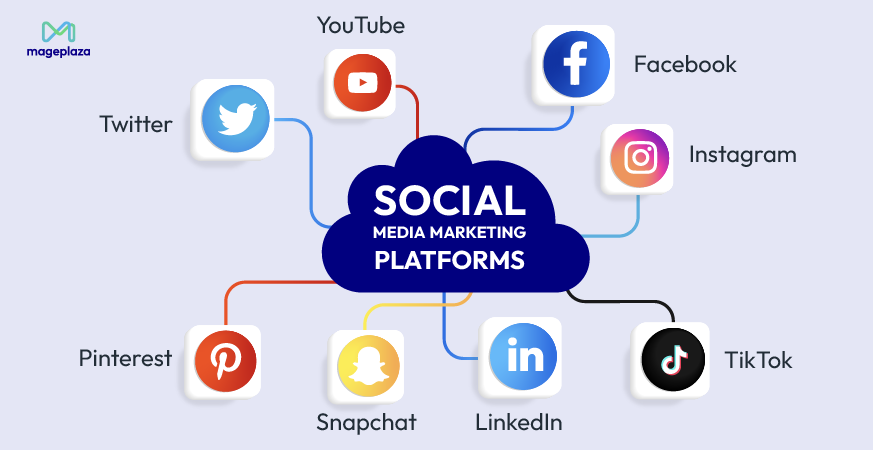
Choosing the right social media platform is crucial for reaching your target audience and achieving your marketing goals. Each platform serves a unique purpose and caters to different types of audiences. Here’s an overview of the key social media marketing platforms and their strengths:
1. Facebook
Audience: Over 3 billion monthly active users, diverse demographics.
Best for: Building brand awareness, paid advertising, community engagement, and customer support.
Key features:
- Facebook Ads: Advanced targeting options (age, location, interests).
- Facebook Groups: Build communities and interact directly with followers.
- Facebook Marketplace: Sell products locally or globally.
- Business Pages: Promote products, post updates, and connect with customers.
Why use it: Facebook’s vast reach and ad tools make it ideal for both organic and paid marketing.
2. Instagram
Audience: 1.6+ billion monthly active users, popular among ages 18–35.
Best for: Visual storytelling, brand building, influencer marketing, and eCommerce.
Key features:
- Instagram Stories & Reels: Short, engaging videos for organic reach.
- Instagram Shopping: Direct product tagging and seamless shopping experiences.
- Influencer Collaborations: Partner with creators to amplify your reach.
- Instagram Ads: Photo, video, carousel, and story ads for targeted campaigns.
Why use it: Ideal for visually driven brands like fashion, beauty, food, and lifestyle businesses.
3. LinkedIn
Audience: 1 billion professionals focused on B2B and career growth.
Best for: B2B marketing, lead generation, thought leadership, and networking.
Key features:
- LinkedIn Ads: Sponsored content, messages, and dynamic ads for professional targeting.
- Articles & Posts: Share thought leadership content and industry insights.
- LinkedIn Groups: Niche communities for professional discussions.
- Sales Navigator: Advanced tools for lead generation and outreach.
Why use it: Essential for B2B businesses, recruiters, and professionals looking to establish authority.
4. Twitter
Audience: 556+ million monthly active users, popular for news, updates, and conversations.
Best for: Real-time updates, customer interaction, brand announcements, and trending discussions.
Key features:
- Twitter Trends & Hashtags: Join trending conversations and increase visibility.
- Tweets & Threads: Share bite-sized, valuable content.
- Twitter Ads: Promoted tweets, accounts, and trends.
- Customer Support: Address queries and feedback directly.
Why use it: Great for brands that focus on news, quick updates, and direct communication.
5. TikTok
Audience: Over 1 billion active users, primarily ages 16–34.
Best for: Short-form video content, viral trends, and engaging younger audiences.
Key features:
- TikTok Trends: Leverage viral challenges, songs, and hashtags.
- Creator Collaborations: Partner with influencers for product promotions.
- TikTok Ads: In-feed ads, branded challenges, and Spark Ads for organic boosts.
- User-Generated Content (UGC): Encourage audience participation through challenges.
Why use it: Powerful for driving engagement, especially for creative and playful brands.
6. Pinterest
Audience: 465+ million active users, with a strong female demographic (ages 25–49).
Best for: Product discovery, DIY, lifestyle inspiration, and visual content.
Key features:
- Rich Pins: Include product details, prices, and links for direct purchases.
- Pinterest Ads: Promoted pins for increased visibility.
- Boards: Organize and share content for specific niches or themes.
- Visual Search: Users can discover similar products through photos.
Why use it: Ideal for e-commerce, DIY, home decor, fashion, and food brands.
7. YouTube
Audience: Over 2.5 billion monthly users, spanning all demographics.
Best for: Long-form video content, tutorials, product demos, and brand storytelling.
Key features:
- YouTube Ads: Skippable, non-skippable, and bumper ads for targeted campaigns.
- Channels & Playlists: Organize content for easy audience navigation.
- YouTube Shorts: Engage viewers with short-form, TikTok-style videos.
- SEO Benefits: Videos rank well on Google search results.
Why use it: Perfect for brands looking to educate, entertain, or showcase products visually.
8. Snapchat
Audience: 557 million monthly users, popular among ages 13–24. Best for: Real-time content, behind-the-scenes moments, and engaging younger audiences. Key features:
- Snapchat Stories: Share ephemeral content (disappears in 24 hours).
- AR Filters & Lenses: Create branded augmented reality experiences.
- Discover Ads: Showcase brand content alongside media publishers.
- Snap Maps: Promote events or locations to local users. Why use it: Ideal for brands targeting Gen Z with creative, time-sensitive content.
How to Analyze Your Social Media Marketing Impact and Results
Effectively analyzing your social media performance ensures that your efforts align with your goals and deliver measurable results. By tracking key metrics, leveraging analytics tools, and optimizing strategies, you can improve your campaigns and maximize ROI.
1. Set clear goals and metrics
The foundation of any effective analysis starts with clearly defined goals. Align these goals with specific Key Performance Indicators (KPIs) to measure success accurately.
| Goal | KPIs to Track |
|---|---|
| Increase Brand Awareness | Reach, Impressions, Follower Growth |
Drive Website Traffic |
Clicks, CTR (Click-Through Rate), Referral Traffic |
| Boost Engagement | Likes, Comments, Shares, Saves, Mentions |
| Generate Leads | Conversion Rate, Leads Captured, CTR |
| Drive Sales | Social Media ROI, Purchases, Conversion Value |
Example:
- Goal: Increase engagement.
- KPI: Track comments, shares, and saves on Instagram posts to evaluate interaction.
Clearly defined goals and metrics provide a roadmap for what to measure and how to assess performance.
2. Use Social Media analytics tools
To gather actionable data, combine native platform analytics with third-party tools for a holistic view of your performance.
Native platform tools:
- Facebook Insights: Tracks metrics like reach, engagement, and page likes.
- Instagram Insights: Measures follower growth, post engagement, and story views.
- LinkedIn Analytics: Provides insights into post views, engagement, and audience demographics.
- X Analytics (formerly Twitter): Tracks tweet impressions, retweets, and mentions.
- YouTube Analytics: Measures watch time, views, audience retention, and traffic sources.
Third-party tools:
- Google Analytics: Tracks referral traffic and conversions from social media.
- Hootsuite or Sprout Social: Aggregates performance metrics across platforms.
Tip: Use these tools to analyze data in real-time and over time, helping you make data-driven decisions.
3. Track audience engagement
Engagement metrics indicate how well your content resonates with your audience. It’s one of the most direct measures of your campaign’s success.
Metrics to measure:
- Likes: Basic audience approval and interest.
- Comments: Reflect deeper engagement and interest in the topic.
- Shares: Indicate content value and virality.
- Saves: Highlight long-term interest and intent to revisit the content.
How to analyze:
- Identify posts with the highest engagement rates.
- Evaluate which content types (videos, images, carousels) perform best.
- Assess trends in post timing and frequency to identify optimal posting times.
4. Measure reach and impressions
Reach and impressions reveal how far your content is spreading and how often it’s being displayed to users.
- Reach: The number of unique users who saw your content.
- Impressions: The total number of times your content was displayed (including repeated views).
How to analyze:
- Monitor changes in reach and impressions over time to evaluate growth.
- Compare organic vs. paid reach to measure the effectiveness of boosted posts.
- Identify trends, such as viral posts that generate spikes in impressions.
Example: A boosted Facebook post with 10,000 impressions but 5,000 reach indicates multiple views from engaged users.
5. Track click-through rates (CTR) and traffic
CTR helps determine how effectively your content drives users to take action, such as visiting your website.
Metrics to measure:
- Link Clicks: From posts, stories, or ads.
- CTR Formula: (Clicks ÷ Impressions) × 100.
- Referral Traffic: Website visits driven by social media, tracked via Google Analytics.
How to analyze:
- Identify platforms that drive the most website traffic.
- Optimize CTAs (calls-to-action) to improve CTR.
- Track landing page performance to ensure users stay and engage after clicking.
6. Monitor conversions and ROI
Conversions and ROI are critical metrics for evaluating the financial impact of your social media campaigns.
Metrics to measure:
- Conversion Rate: Percentage of users who completed a desired action (e.g., purchase, sign-up).
- Cost Per Conversion: The cost to achieve one conversion.
- ROI Formula: [(Revenue – Cost) ÷ Cost] × 100.
How to analyze:
- Use UTM parameters in links to track specific campaign conversions in Google Analytics.
- Monitor sales generated from social ads with e-commerce tracking tools.
- Identify campaigns with the highest ROI and allocate more budget to scale them.
7. Analyze Audience Growth and Demographics
Understanding your audience’s growth and profile helps you refine your strategy for long-term success.
Metrics to measure:
- Follower growth: New followers gained vs. lost over a specific period.
- Demographics: Age, gender, location, and interests of your audience.
How to analyze:
- Use native analytics to understand who your followers are and how they align with your target audience.
- Identify which content attracts new followers and adjust your strategy to replicate success.
8. Evaluate Content Performance
Evaluating content performance helps you identify what works and refine your strategy accordingly.
Metrics to measure:
- Post Engagement Rate: (Engagements ÷ Reach) × 100.
- Best-Performing Content: Content types (videos, infographics, carousels) with high engagement rates.
How to analyze:
- Compare performance across content types (e.g., short videos vs. static images).
- Review engagement trends over time (daily, weekly, monthly).
- Use insights to focus on creating content that aligns with your goals.
9. Create a Performance Report
Compile your findings into an actionable performance report to guide future campaigns.
What to include:
- Goals and KPIs
- Key metrics: Reach, engagement, traffic, conversions
- Best-performing content and actionable insights
- Audience growth and demographics
- ROI analysis and recommendations for improvement
Tools to use:
- Google Data Studio: Build custom dashboards for clear data visualization.
- Native Platform Reports: Use Facebook, Instagram, and LinkedIn reports to extract insights.
Future Trends to Watch in Social Media Marketing
The future of social media is dynamic and ever-evolving. Stay ahead with these trends:
1. Short-form video dominance
Platforms like TikTok and Instagram Reels will continue to lead engagement.
2. Social commerce growth
Seamless in-app shopping experiences will drive more sales.
3. AI and personalization
AI tools will enable highly personalized ads and content recommendations.
4. AR and VR integration
Augmented and virtual reality will enhance product discovery and customer experiences.
5. Niche communities
Brands will focus on building deeper connections through Facebook Groups, Discord, and similar platforms.
Conclusion
Social media marketing is a powerful tool to build connections, boost brand visibility, and drive conversions. By creating valuable content, engaging with your audience, and optimizing performance, you can skyrocket your engagement and achieve remarkable business results.
Start implementing these strategies today and watch your social media presence soar. Remember, consistency and creativity are your keys to success!
Table of content

Summer is the CMO and Digital Commerce Solution Expert with 10+ years of experience. She specializes in Magento, Shopify, ERP, CRM, AI, and Blockchain, delivering strategic solutions that transform businesses. With a deep understanding of digital commerce, she helps brands scale and stay ahead in a competitive market.
Related Post

Magento 2.4.9 Beta Release: What's New?
Magento 2.4.9 beta is here. Stay up to date with every release milestone with this regularly updated guide.
11 mins read
|
03-17-2026
Google Analytics Website Traffic: The A–Z Guide for Magento 2 Store Owners
Learn how to analyze website traffic in Google Analytics 4, identify high-quality traffic sources, and grow your Magento 2 store with data-driven insights.
18 mins read
|
03-17-2026

The Complete Guide to UTM Parameters & Google Analytics for Magento website
Master UTM parameters and Google Analytics for Magento. Track traffic sources, measure campaign performance, and practical tips to use it for better business decisions.
9 mins read
|
10-05-2025
How to implement Cookie Consent for GTM & Google Analytics in Magento Under GDPR?
Implement cookie consent for GTM & GA4 in Magento under GDPR. Step-by-step guide using Google Consent Mode v2 to avoid fines and maintain analytics.
15 mins read
|
02-27-2026

Speed vs. Sales: Comparing Hyvä Checkout and Mageplaza One Step Checkout
Learn how Hyvä Checkout and Mageplaza One Step Checkout impact order completion rates and revenue growth.
8 mins read
|
02-25-2026
1 min read
|
03-30-2026
Magento 2.4.9 Beta Release: What's New?
Magento 2.4.9 beta is here. Stay up to date with every release milestone with this regularly updated guide.
11 mins read
|
03-17-2026
Google Analytics Website Traffic: The A–Z Guide for Magento 2 Store Owners
Learn how to analyze website traffic in Google Analytics 4, identify high-quality traffic sources, and grow your Magento 2 store with data-driven insights.
18 mins read
|
03-17-2026
The Complete Guide to UTM Parameters & Google Analytics for Magento website
Master UTM parameters and Google Analytics for Magento. Track traffic sources, measure campaign performance, and practical tips to use it for better business decisions.
9 mins read
|
10-05-2025
How to implement Cookie Consent for GTM & Google Analytics in Magento Under GDPR?
Implement cookie consent for GTM & GA4 in Magento under GDPR. Step-by-step guide using Google Consent Mode v2 to avoid fines and maintain analytics.
15 mins read
|
02-27-2026
Speed vs. Sales: Comparing Hyvä Checkout and Mageplaza One Step Checkout
Learn how Hyvä Checkout and Mageplaza One Step Checkout impact order completion rates and revenue growth.
8 mins read
|
02-25-2026